

1. Historical Timeline
KEY POINTS
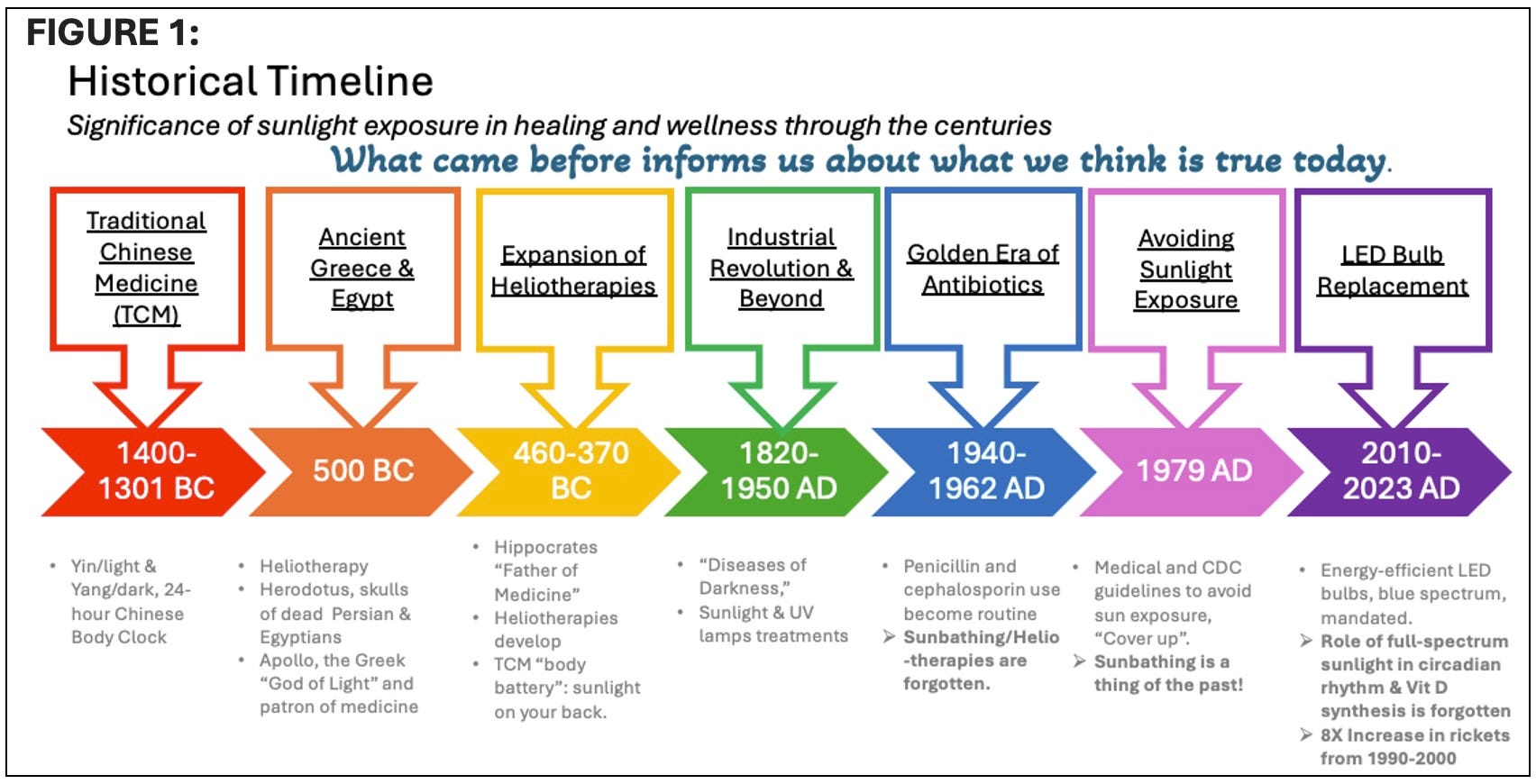
Historically, the significance of human health and sunlight can be traced back at least 3,300 years. Traditional Chinese Medicine (TCM) recognized the role of the circadian clock in human physiology. The ancient Greeks and Egyptians used sunbathing as heliotherapy to treat disease. By the 20th Century, sunbathing was used to treat tuberculosis. We recognized the role of sunshine in synthesizing vitamin D. By the 21st Century, we have both acknowledged the health benefits of sunlight while also advising that we reduce our exposure. A notable discrepancy that remains today!
The use of sunlight exposure to promote health and wellness has been documented for over 3,300 years. Some key milestones on the significance of sunlight exposure have been outlined below, starting from the earliest recorded evidence around 1400 BC to date (Figure 1):
The value of a historical timeline
The value of a historical timeline lies not just in seeing the evolution of a topic over time, but also in reminding us of lessons long forgotten. A philosopher, George Santayana, said
Those who cannot remember the past are condemned to repeat it.
(Santayana 1905)
Over the centuries, we have become increasingly distracted by medical and technological advances. Rather than integrating old knowledge with new, we replace it and forget what was well understood. Hospitals, in a practice dating back to ancient times, would expose ill patients to sunlight to bolster their chances of recovery from infections such as tuberculosis (Figure 2) (Masten 1935).
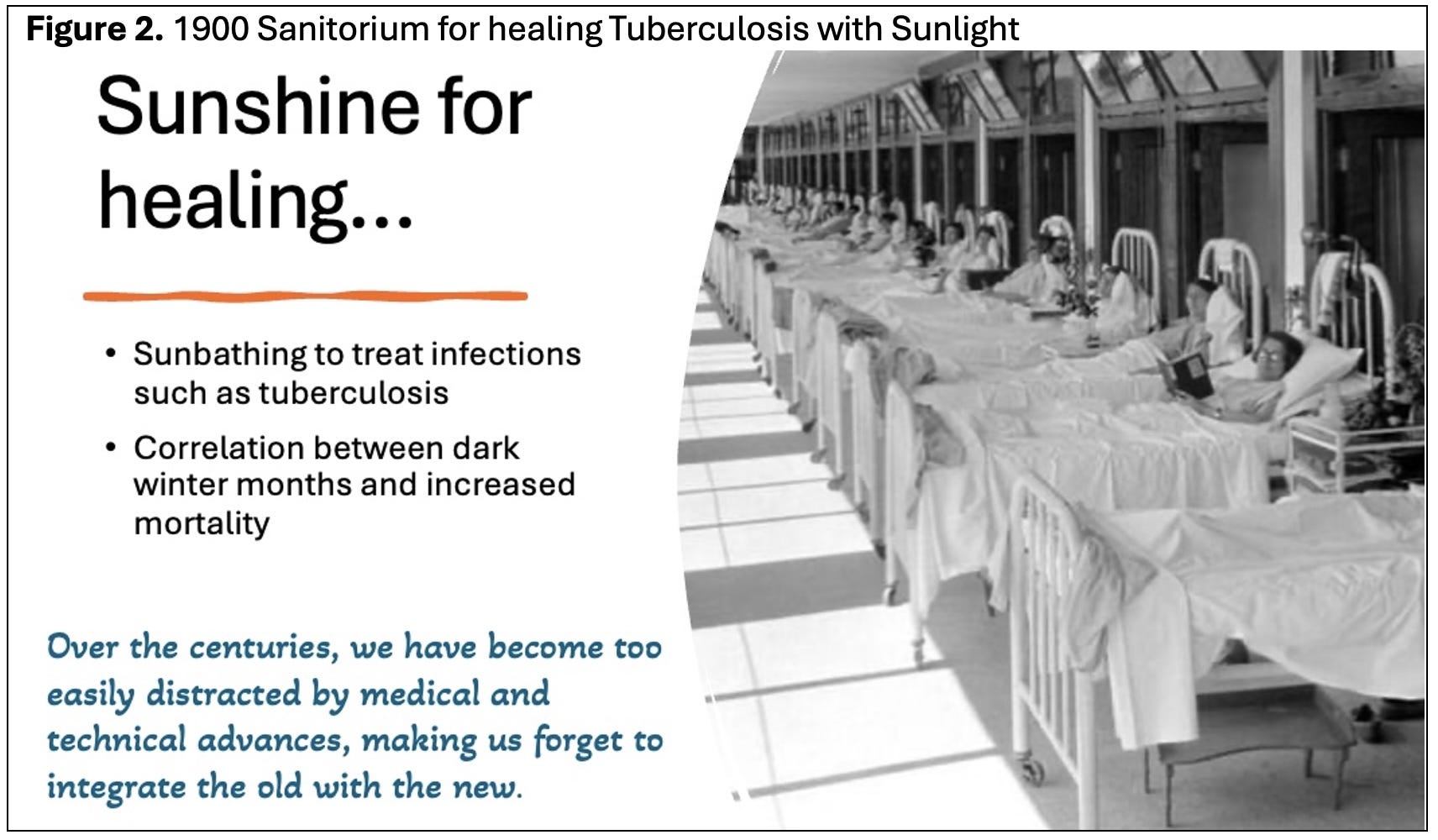
The correlation between the dark winter months and increased mortality (death) from afflictions such as the flu further underscores the historical significance of sunshine in healthcare (Ma and Khan 2018).
Earliest Knowledge of Sunshine & Health
Over 2,500 years ago, the ancient Chinese and Greeks observed significant connections between sunlight and human health (Figure 3). They relied heavily on observational research to understand and explain the real world.
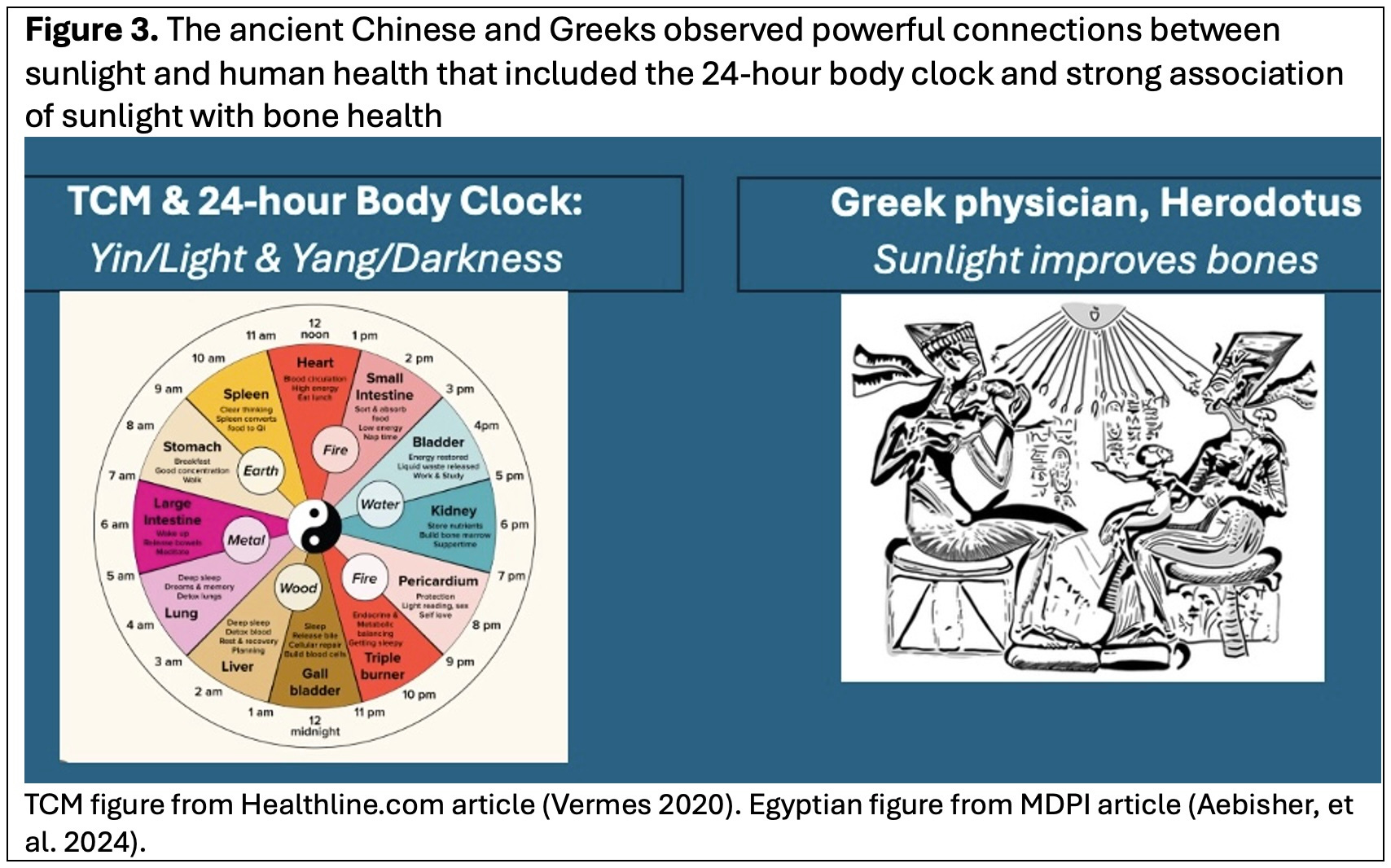
A combination of quantitative and qualitative methods was used to gather information. Rather than confirming their beliefs, they challenged and honed them over the centuries.
For example, Traditional Chinese Medicine (TCM) created the concept of the 24-hour body clock, which consists of Yin (Light) and Yang (Darkness) (Figure 3). Today, this is described as the circadian rhythm, in which cortisol levels peak around 7:00 AM and dip as melatonin levels peak around 9:00 PM. Moreover, light and dark cycles are known to be the most important stimuli for the circadian rhythm, creating a complex feedback loop involving the eyes, brain, skin, and peripheral organs (Wu and Zhao 2024).
In another example, the ancient Greek physician, Herodotus, examined the skulls of dead Egyptian and Persian soldiers left lying on a battlefield near the Nile. These bodies had been lying in two distinct piles for over 75 years after a major battle. Herodotus noted a striking difference between the Egyptian and Persian skull thickness.
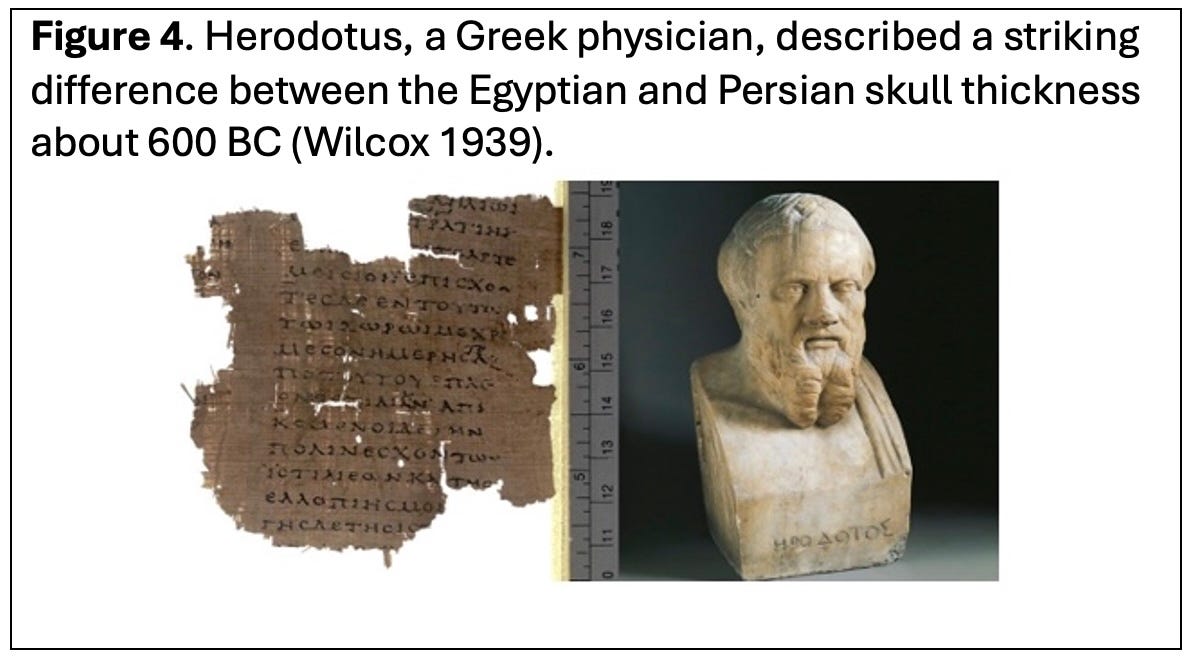
He recorded his observations (Wilcox 1939):
I saw a great marvel of which I had heard from natives of the country…The bones of the Persians lay in one part of the field, and the bones of the Egyptians in another….The skulls of the Persians were so fragile that a mere pebble thrown at them would penetrate them…those of the Egyptians were so strong that they could hardly break them with a stone…from childhood, the Egyptians shave their heads, and the bone is thickened by exposure to the sun…Persians have weak skulls …they cover their heads all their lives… (from translation published by Wilcox 1939 )
In brief, Herodotus hypothesized that sun exposure increased the thickness and bone quality of Egyptian skulls compared with those of Persian skulls. This is believed to be the earliest recorded connection between sunlight and bone health. The use of the sun to treat various health ailments throughout the ages eventually came to be known as heliotherapy.
Over 2000 Years ago, Hippocrates & TCM developed the use of heliotherapies
TCM, or traditional Chinese medicine, holds that our backs are our body’s battery, a key area for absorbing “yang” (light) energy from the sun. Hippocrates, the Greek “father of medicine”, observed that people living in the sunnier locations of town were healthier than those in the darker areas (Figure 5).
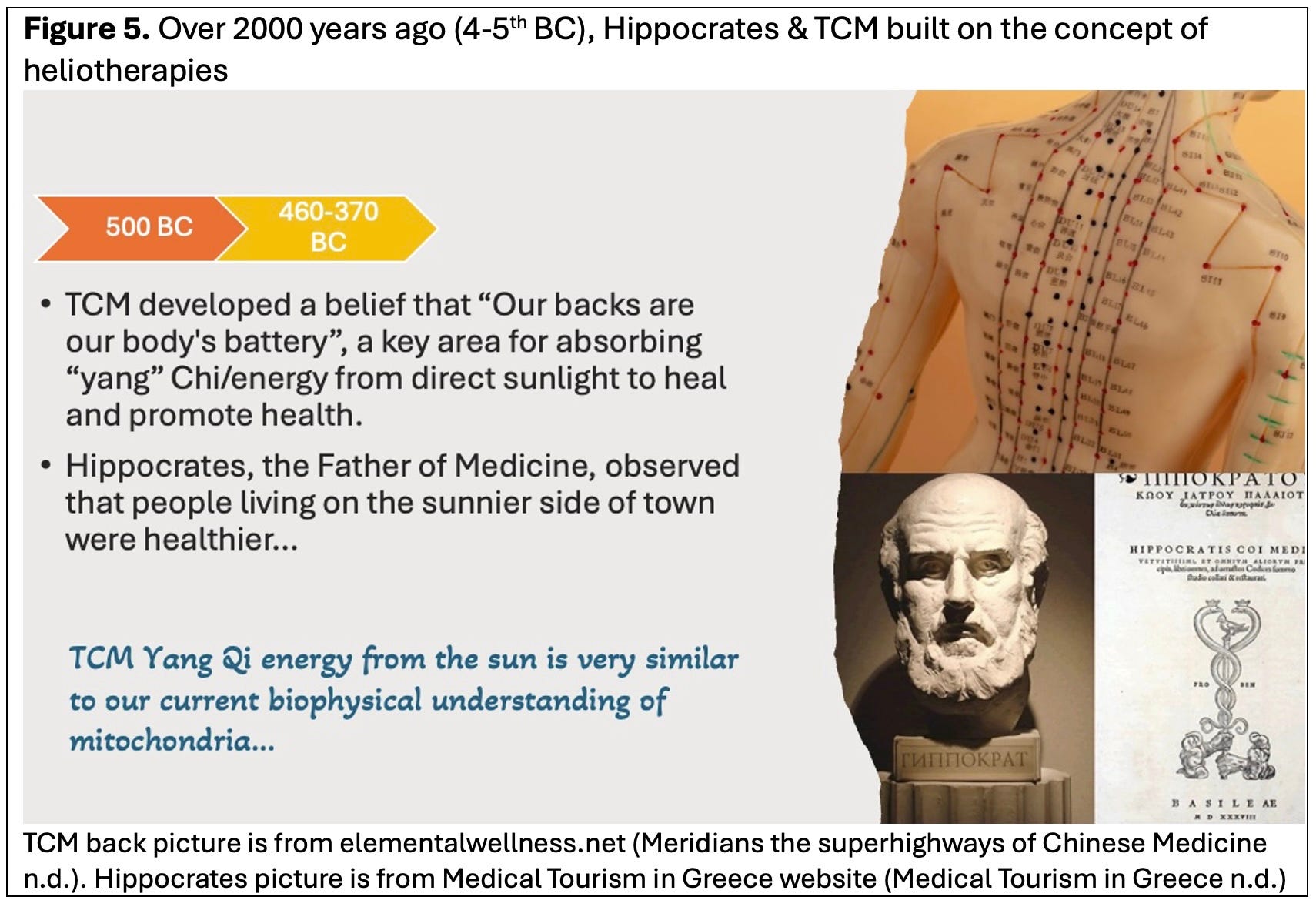
Yang Chi/energy and the health benefits of sunshine align with our current understanding of biophysics and mitochondria’s role in supporting cellular health (Luo, et al. 2022).
Upcoming Post #2 on Sunshine: Yang/Chi Energy, Mitochondria & The Industrial Revolution
Complete Bibliography:
See the separate post